A laser cell waiting for an operator to unload parts, a press brake waiting for a forklift, and a warehouse managed by paper tickets can all limit output more than machine cycle time. The most relevant sheet metal automation trends address those gaps between processes. For manufacturers, the goal is not automation for its own sake. It is a production system that moves material predictably, protects quality, and keeps skilled people focused on work that requires judgment
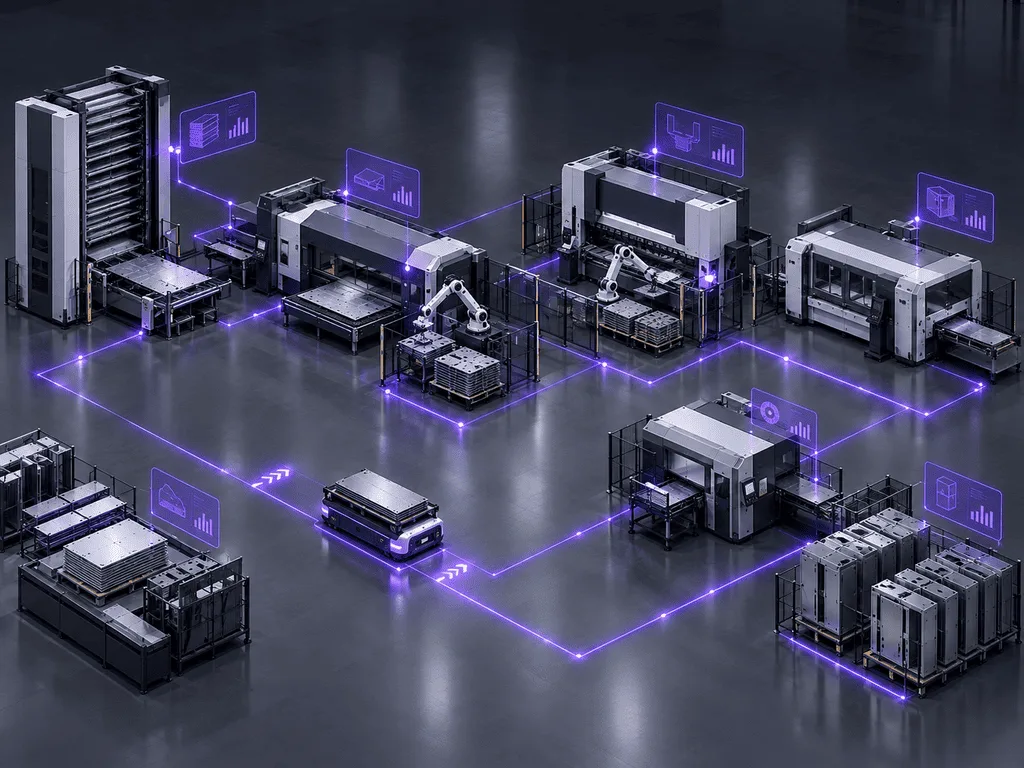
Capital equipment decisions are therefore shifting from isolated machine comparisons to flow-based planning. A high-performance laser, panel bender, or punching machine still matters, but its value depends on how reliably it receives material, how parts are routed after processing, and how production data reaches the people making decisions.
Sheet Metal Automation Trends Moving Beyond Standalone Machines
The largest change is the move from machine automation to connected process automation. A standalone automated loader can improve one cutting department. A coordinated system can connect raw material storage, cutting, sorting, bending, inspection, and downstream assembly according to live production priorities.
This does not mean every fabricator needs a fully unattended factory. High-mix operations, short runs, and frequent engineering changes often benefit more from flexible, operator-assisted automation than from a rigid transfer line. The correct level depends on part families, batch sizes, shift structure, available floor space, and the cost of material handling delays.
For many facilities, the practical first step is automating the bottleneck around a proven machine rather than replacing an entire department. A laser cutting machine paired with automatic loading and unloading, for example, may create more usable capacity than adding another standalone laser. The same logic applies to bending, where robotic handling or an automatic panel bending system can stabilize output for repeatable components.
Material Flow Is Becoming a Production Priority
Sheet metal automation increasingly starts before the first cut. Vertical warehouses and automated storage systems give manufacturers controlled access to sheets, remnants, tools, and work-in-process material. They reduce unnecessary forklift traffic, improve inventory accuracy, and make material available when the program calls for it.
The operational gain is not simply faster loading. Organized storage supports nesting efficiency, traceability, and production scheduling. When a system knows the available material grade, thickness, finish, and location, planners can make better routing decisions and avoid stopping an expensive machine for a preventable material search.
Floor space is a decisive factor. Vertical storage can recover valuable production area in plants where sheet racks, pallets, and staged parts have expanded into travel paths. However, storage automation must be sized around actual demand. An oversized tower with insufficient material turnover can tie up capital, while an undersized system can create the very queue it was intended to eliminate.
Cutting Automation Is Expanding Its Role
Laser cutting remains a central automation platform because it processes a broad range of parts and feeds several downstream operations. Current investment is focused on automated loading and unloading, pallet handling, part sorting, and integration with storage. The purpose is to extend productive cutting hours and reduce the dependence on an operator being present for every sheet change.
Part sorting is especially significant for shops producing mixed nests. Removing cut parts is manageable. Separating them accurately for different orders, bends, and assembly routes is where many manual workflows lose time and traceability. Automated sorting systems can reduce this burden, but they require disciplined programming, part identification, and a stable process for skeleton removal and exception handling.
Punching machines and combi punch-laser systems also remain strong candidates for automation where formed features, louvers, threads, embosses, or high-volume repetitive work are required. Their advantage is not only speed. They can consolidate operations that would otherwise require secondary handling, provided the part mix and tooling strategy justify the investment.
Bending Automation Favors Repeatability and Part Design
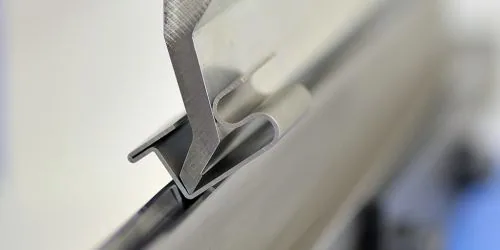
Bending is often the next major constraint once cutting becomes automated. Press brake automation with robotic handling can provide consistent loading, turning, and unloading for suitable parts. It is highly effective for repeat orders with predictable geometry, but not every part belongs in a robotic cell. Complex components, low quantities, frequent setup changes, and unstable incoming material can favor an experienced brake operator.
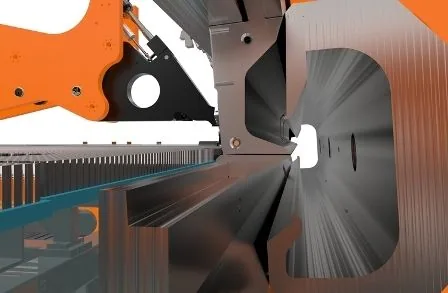
Panel benders are gaining attention because they offer an alternative route for specific part families, particularly panels, enclosures, cabinets, and components with repeatable flanges. Their automated handling and bending sequence can deliver high consistency while reducing manual repositioning. The evaluation should begin with the actual part portfolio, not with a general assumption that one bending technology replaces another.
A balanced department may combine automated panel bending for high-repeat panel work, robotic press braking for stable batch production, and conventional press brakes for prototypes, large parts, and variable work. This mixed approach often provides better return than attempting to force every job through one automated method.
Software Is the Control Layer, Not an Add-On
Automation hardware cannot operate efficiently on disconnected data. Nesting, production scheduling, machine communication, tool management, warehouse control, and job tracking must work from reliable information. Software platforms such as Lantek can help connect these functions, turning individual machines into a coordinated production environment.
The immediate benefit is visibility. Production managers can see which jobs have been released, which sheets are consumed, where parts are waiting, and which machine conditions are affecting throughput. Over time, the same data supports better quoting, more accurate delivery commitments, and decisions based on actual production performance rather than assumptions.
Data quality remains the limiting factor. Incorrect routings, incomplete bills of materials, unmanaged revision changes, and inconsistent part names will reduce the value of any software deployment. Successful projects assign ownership for production data and establish clear rules before connecting more equipment. The technical integration matters, but operational discipline matters just as much.
Traceability and Quality Are Becoming Automation Requirements
Manufacturers supplying demanding industrial sectors face stronger expectations for material traceability and repeatable quality. Automated production can support those requirements by linking material batches, nesting records, machine parameters, and job status. This is particularly useful for work involving certified material, cosmetic finishes, or parts that move through multiple production stages.
Automation also helps reduce variation in handling. Consistent loading, bending sequences, and tool selection can limit damage, orientation errors, and setup-related quality issues. Yet automated equipment does not eliminate the need for inspection. It changes where inspection delivers the most value, shifting attention toward first-piece approval, process verification, and exceptions rather than repetitive manual checking.
Deburring and finishing are increasingly included in automation planning for the same reason. A cut part that waits in a bin for manual finishing can interrupt lead time and create avoidable handling. Integrating deburring, edge rounding, or surface finishing into the route makes the final output more predictable, especially for parts moving directly to coating, welding, or assembly.
Labor Strategy Is Driving Automation Decisions
Labor availability is a real constraint across fabrication, but the answer is not simply to remove operators from the floor. The most productive plants use automation to reduce repetitive handling, heavy lifting, and constant machine tending. Skilled employees can then take on setup, quality control, maintenance, programming, troubleshooting, and continuous improvement work.
This transition requires training. An automated line is only as dependable as the people who can prepare jobs, respond to alarms, manage tools, and recover production after an exception. Equipment selection should include an implementation plan covering installation, operator training, programming support, preventive maintenance, spare-parts planning, and response expectations.
That is why the supplier relationship matters as much as machine specifications. Italian Machinery Association approaches automation projects as integrated manufacturing investments, combining premium equipment categories with application knowledge, installation support, and long-term service planning.
How to Evaluate an Automation Project
The strongest business cases begin with measured production data. Review machine utilization, labor hours spent moving material, setup time, queue time between operations, rework, overtime, floor-space constraints, and delivery performance. These figures reveal whether the true constraint is cutting capacity, bending capacity, material availability, or process coordination.
Then define the target state around part families and expected demand, not a single exceptional order. A solution for stable, high-volume components will differ from one intended for contract fabrication with hundreds of changing part numbers. Plan for practical exceptions: damaged sheets, urgent jobs, small batches, maintenance windows, and manual rework routes. Systems that handle exceptions clearly are more dependable than systems designed only for ideal conditions.
A phased approach often reduces risk. Start with a connected storage and cutting cell, establish reliable data and material flow, then extend automation into sorting, bending, finishing, or intralogistics as volumes justify it. The right sequence protects cash flow while building the internal operating discipline needed for more advanced automation.
The next competitive advantage in sheet metal fabrication will come from making every transition between operations more controlled. When equipment, storage, software, and trained personnel work as one system, automation becomes a dependable way to increase capacity without creating more complexity.